Illinois Medicaid eligibility nursing home
How to Qualify for Medicaid for Nursing Home Care in Illinois: A Step-by-Step Guide
Figuring out how to pay for long-term nursing home care is one of the hardest financial challenges a family can face. Medicare covers short-term rehabilitation, but it doesn't pay for extended nursing home stays. For many Illinois families, Medicaid becomes the bridge that makes long-term care possible.
The good news is that more families qualify than realize it — even those with income above the standard limit. This step-by-step guide walks you through what it takes to qualify for Medicaid nursing home coverage in Illinois in 2026.
Step 1: Confirm Your Loved One Meets the Medical Criteria
Before the financial side even comes into play, your loved one must qualify medically. Illinois requires that nursing home Medicaid applicants need a Nursing Facility Level of Care (NFLOC) — meaning they require the kind of continuous care that only a nursing home can provide.
The state assesses this through a formal evaluation by the Department on Aging (DoA) or the Department of Human Services (DHS). The evaluator will review your loved one’s ability to manage Activities of Daily Living (ADLs) — bathing, dressing, eating, mobility, and toileting — as well as any cognitive conditions like dementia or Alzheimer’s disease.
If the assessment confirms nursing-level care is needed, you can proceed to the financial qualification steps.
Step 2: Review the Income Requirements
In Illinois, the income limit for Nursing Home Medicaid for a single applicant is $1,304 per month in 2026. For married couples with both spouses applying, the combined limit is $1,762 per month.
If your loved one’s income exceeds this limit, don’t assume they’re automatically disqualified. Illinois has a Medically Needy Pathway (spenddown program) that allows seniors to qualify by directing the excess income above the limit toward qualifying medical expenses. An elder law attorney or Medicaid planning specialist can help you understand how this works in practice.
Once on Medicaid, nursing home residents are required to contribute nearly all of their monthly income toward the cost of care — retaining only a $60 personal needs allowance per month, plus Medicare premium payments if applicable.
Step 3: Understand the Asset Limits
In 2026, a single applicant must have $17,500 or less in countable assets to qualify for Illinois Nursing Home Medicaid. Countable assets include bank accounts, investment accounts, retirement funds, and other liquid assets.
Assets that are generally exempt — and don’t count toward the limit — include:
- A primary home with equity up to $730,000 (if the applicant intends to return, or if a spouse or qualified dependent lives there)
- One vehicle used for personal or medical transportation
- Personal belongings, household furniture, and clothing
- Prepaid, irrevocable funeral and burial contracts up to $8,434
For married applicants where only one spouse is applying, the community (non-applying) spouse can retain up to $143,172 in countable assets in 2026, thanks to the Community Spouse Resource Allowance.
Step 4: Understand and Prepare for the 5-Year Look-Back
This is the step that catches the most families off guard. Illinois enforces a 60-month (5-year) look-back period when reviewing Medicaid applications for nursing home care. During this review, the state examines all financial transactions — including gifts, asset transfers, and property transfers — made in the five years before the application date.
If assets were transferred for less than fair market value during that period (for example, gifting money to children or transferring a home), Medicaid may impose a penalty period — a window of time during which Medicaid will not pay for care.
This is why Medicaid planning is most powerful when done well in advance. If your family is thinking about this now, even years before care is needed, speaking with an elder law attorney can protect far more of your loved one’s assets.
Step 5: Gather Your Documentation
The Medicaid application process requires detailed financial documentation. Gather the following before applying:
- Proof of identity (birth certificate, Social Security card)
- Proof of Illinois residency
- Last 5 years of financial records — bank statements, investment accounts, property records
- Documentation of all income sources — Social Security, pension, annuities, retirement distributions
- Information about any assets transferred in the past 60 months
- Medicare card and any supplemental insurance information
- Medical records and physician documentation supporting the need for nursing-level care
Step 6: Submit the Application
You can apply for Illinois Medicaid through the Illinois Department of Human Services (DHS) using the following options:
- Online through the ABE Portal (abe.illinois.gov)
- By phone at 1-800-843-6154
- In person at your local DHS Family Community Resource Center
The application process also involves a needs assessment coordinated through the Department on Aging. The full approval process can take 45 to 90 days, so applying as early as possible is important.
What If My Loved One Is Over the Asset Limit?
Being over the asset limit doesn’t mean Medicaid is out of reach. There are legal strategies that can help families spend down or restructure assets in a compliant way — including Irrevocable Funeral Trusts, Medicaid Compliant Annuities, and careful use of exempt asset categories. These strategies must be implemented properly to avoid look-back violations, which is why working with a qualified elder law attorney is strongly recommended.
How Alpine Fireside Health Center Helps Families Navigate Medicaid
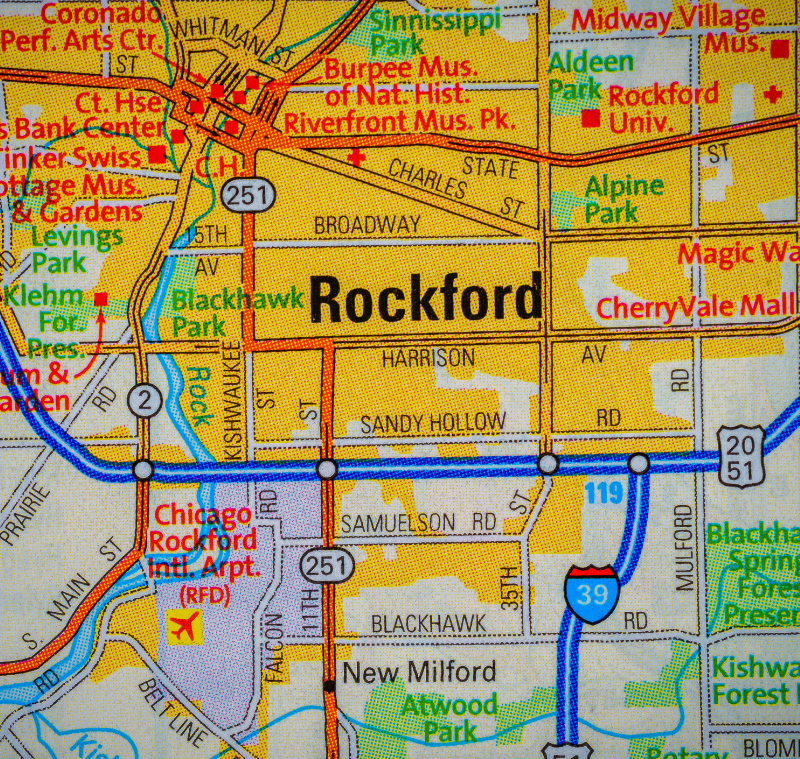
At Alpine Fireside Health Center in Rockford, IL, our experienced admissions team has walked with hundreds of Winnebago County families through the Medicaid process. We can help you understand your options, connect you with the right resources, and make the transition to long-term care as smooth as possible.
We’re a Medicaid-certified facility, which means that once approved, your loved one can receive high-quality, compassionate care right here in Rockford — close to family, close to home.
For over 50 years, Alpine Fireside has built an outstanding reputation for quality care. We understand that access to continuing care is crucial for many, and we are well-equipped to meet the evolving needs of our residents.
- Over 50 Years of Excellence
- Comprehensive Care Services
- Personalized Care Plans
- Caring and Dedicated Staff
- Welcoming and Secure Environment