
Parkinson's Care Facility
Parkinson's Disease Care in Nursing Homes: Safety and Therapy
Parkinson's disease affects more than one million Americans, and as the disease progresses, many families find that the level of care required surpasses what can be safely provided at home. Tremors, rigidity, balance problems, swallowing difficulties, and cognitive changes can all become serious safety risks without the right professional support.
Skilled nursing facilities with experience in Parkinson's care offer a comprehensive approach: physical therapy to maintain mobility, speech therapy to address swallowing and communication, occupational therapy for daily living skills, and nursing staff trained to recognize and respond to the unique challenges Parkinson's presents.
This guide explains what Parkinson's-specific care looks like in a skilled nursing setting and what families should look for when evaluating facilities.
Challenges Of Parkinsons
Understanding the Challenges of Advanced Parkinson's Disease
Parkinson's is a neurodegenerative disease that affects the nervous system's ability to control movement. It progresses differently for each person, but common challenges in later stages include:
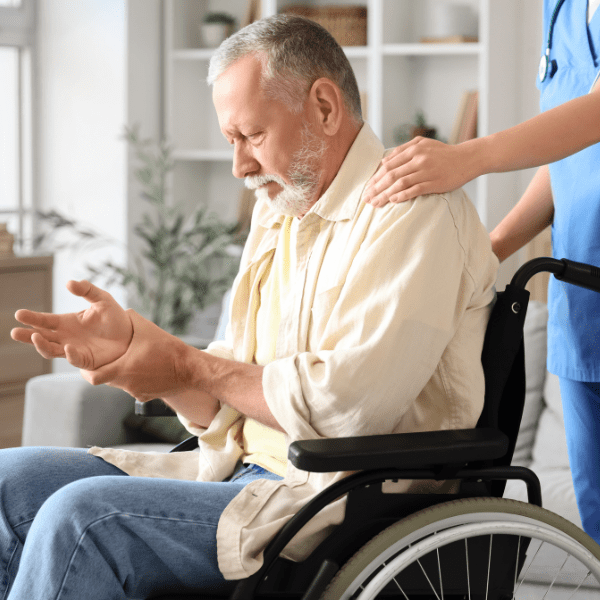
- Significant tremors affecting the hands, arms, legs, and face
- Muscle rigidity that makes movement slow and effortful
- Postural instability and a high risk of falls
- Freezing of gait — sudden inability to initiate movement
- Dysphasia (swallowing difficulties) and aspiration risk
- Soft or slurred speech (dysarthria)
- Dementia or cognitive changes in later Parkinson's stages
- Autonomic symptoms including blood pressure fluctuations and constipation
- Sleep disturbances, including REM behavior disorder
How Skilled Nursing Facilities Support Parkinson's Patients
Alpine Fireside Health Center Rockford, IL
Fall Prevention and Safety Planning
Falls are the most immediate safety concern for Parkinson's patients. The combination of balance problems, freezing episodes, and slowed reflexes makes falls highly likely — and the consequences, including fractures and head injuries, can be severe.
Skilled nursing facilities implement individualized fall prevention plans that may include:
- Non-slip footwear and adaptive clothing that is easy to put on and remove
- Bed and chair alarms to alert staff when a resident attempts to rise independently
- Grab bars, raised toilet seats, and other environmental modifications
- Walking aids — walkers, canes, or rollators — fitted and monitored by physical therapists
- Regular exercise programs targeting balance and lower body strength
- Scheduled toileting to reduce urgency-related rushing that causes falls
Physical Therapy for Mobility and Strength
Physical therapists who work with Parkinson's patients use evidence-based approaches to maintain mobility and reduce fall risk. One of the most effective is LSVT BIG therapy — a high-intensity program that teaches patients to make bigger, more deliberate movements, compensating for the tendency toward small, shuffled steps.
Other PT approaches include gait training, balance exercises, transfer training (safely moving from bed to chair to standing), and strengthening exercises for core and lower body muscles. Even patients with significant Parkinson's progression can often maintain or improve function with consistent, skilled physical therapy.
Speech Therapy for Swallowing and Communication
Swallowing difficulties — dysphagia — are a serious complication of Parkinson's disease. When the muscles controlling swallowing are affected, food and liquid can enter the airway rather than the stomach, leading to aspiration pneumonia, one of the leading causes of death in advanced Parkinson's.
Speech-language pathologists in skilled nursing facilities assess swallowing function and develop modified diet plans — thickened liquids, soft foods, or pureed textures — to keep residents safe during meals. They also provide exercises to strengthen swallowing muscles and train nursing staff on proper feeding techniques.
Communication therapy addresses soft or slurred speech using LSVT LOUD therapy, which trains patients to speak at a higher volume and with more intentional articulation — often producing dramatic improvements.
Occupational Therapy for Daily Living
Medication Management — A Critical Component of Parkinson's Care
Parkinson's medications — particularly levodopa/carbidopa — are highly time-sensitive. Missing a dose or taking it late can lead to dramatic motor fluctuations: periods of good mobility ("on" time) alternating with severe rigidity and freezing ("off" time).
Skilled nursing staff are trained to administer Parkinson's medications precisely on schedule and to communicate immediately with the attending physician if doses are missed or if a resident's motor status changes unexpectedly. This level of medication precision is very difficult to achieve with home care alone.
Nutrition and Hydration Support
Maintaining adequate nutrition is challenging for Parkinson's patients who struggle with swallowing, hand tremors that make eating difficult, reduced sense of smell affecting appetite, and constipation. Skilled nursing dietitians develop meal plans tailored to each resident's swallowing ability and nutritional needs, and nursing staff provide hands-on assistance at mealtimes as needed.
Compassionate Parkinsons Care in Rockford IL
What Families Should Look for in a Parkinson's-Friendly Skilled Nursing Facility
- Staff trained in Parkinson's-specific care, including medication timing protocols
- Access to physical, occupational, and speech therapy with Parkinson's experience
- LSVT BIG and/or LSVT LOUD certified therapists (a significant advantage)
- Robust fall prevention program with individualized safety planning
- A structured daily routine — predictability helps reduce Parkinson's anxiety and motor fluctuations
- Experience managing dysphagia and modified diet programs
- Strong communication with the resident's neurologist or movement disorder specialist
Skilled Nursing In Rockford IL
Parkinson's Care at Alpine Fireside Health Center
At Alpine Fireside Health Center in Rockford, our therapy and nursing teams have experience caring for residents with Parkinson's disease at various stages. We understand the precision, patience, and adaptability that Parkinson's care requires — from medication timing to individualized therapy approaches.
We work closely with each resident's physician to build a care plan that addresses their specific Parkinson's profile, monitors for changes, and adjusts as the disease evolves. Our goal is to help every resident maintain their highest possible level of independence, safety, and dignity.