how to pay for nursing home care
Ways to Pay for Skilled Nursing Care Beyond Medicare: A Guide for Illinois Families
Medicare is a powerful benefit — but it has limits. It covers short-term skilled nursing rehabilitation after a qualifying hospital stay, but it doesn't pay for long-term nursing home care. Once Medicare coverage ends, families are often left with a pressing question: now what?
The good news is that there are multiple ways to cover nursing home costs in Illinois, and most families end up using a combination of them. Here's a clear breakdown of each option.
1. Medicaid — The Most Common Long-Term Solution
For many Illinois families, Medicaid becomes the primary payer for long-term nursing home care. Illinois Nursing Home Medicaid is an entitlement program — meaning anyone who meets the eligibility requirements receives benefits, with no waiting list.
In 2026, a single applicant must have $17,500 or less in countable assets and income at or below $1,304 per month. Married couples receive important protections, including the Community Spouse Resource Allowance, which allows the non-applying spouse to retain up to $143,172 in assets.
Qualifying for Medicaid often requires planning — particularly around Illinois’s 5-year look-back period for asset transfers. Families who start planning early are in a much stronger position. Alpine Fireside Health Center is Medicaid-certified and accepts Medicaid as payment for long-term care.
2. Long-Term Care Insurance
Long-term care insurance (LTC insurance) is a policy purchased in advance — typically in your 50s or early 60s — that pays a daily or monthly benefit when the policyholder requires care assistance. Benefits usually kick in when the insured can no longer perform a specified number of Activities of Daily Living (ADLs).
LTC insurance policies vary considerably, and the benefit amount, elimination period (how long you wait before benefits begin), and covered care settings all depend on the specific policy. Key things to check in a policy include:
- Daily or monthly benefit amount
- Inflation protection (is the benefit amount indexed to care cost increases?)
- Elimination period (typically 30 to 90 days before benefits begin)
- Covered settings — does it pay for nursing home, assisted living, and home care?
If a family member has an existing LTC policy, review it carefully with an insurance professional before placement to understand exactly what it covers and how to activate benefits.
3. Veterans’ Benefits — Aid and Attendance
Veterans and their surviving spouses who need help with daily living activities may be eligible for the VA Aid and Attendance benefit. This is a pension enhancement that provides significant monthly financial assistance toward care costs — and it’s underutilized, because many families don’t know it exists.
As of 2026, the Aid and Attendance benefit can provide:
- Up to $2,727 per month for a veteran with a spouse
- Up to $2,300 per month for a single veteran
- Up to $1,478 per month for a surviving spouse of a veteran
Eligibility is based on wartime service, medical need, and income/asset criteria. If you believe a loved one may be eligible, the VA can guide you through the application process, or you can work with a VA-accredited claims agent.
4. Private Pay — Personal Assets and Savings
Many families begin covering nursing home costs with private savings before transitioning to Medicaid or other benefits. Private pay resources can include:
- Personal savings accounts and checking accounts
- Retirement accounts — IRAs, 401(k)s, pensions
- Proceeds from the sale of a home
- Stocks, bonds, and investment accounts
- Annuities or structured income sources
Private pay gives families the most flexibility in choosing a facility and room type, as Medicaid typically only covers semi-private rooms. If a family is private-paying, it also simplifies the transition timeline. A financial planner with elder care experience can help families stretch private resources as far as possible.
5. Bridge Loans and Reverse Mortgages
Selling a family home to fund care takes time. A bridge loan can cover nursing home costs in the short term while a home sale is pending — providing immediate cash flow without needing to liquidate other assets quickly.
A reverse mortgage is another option for married couples where one spouse remains at home. The equity in the home is converted to a loan that pays out over time, covering the nursing home costs for the spouse receiving care while the community spouse continues living in the home.
Both options involve careful financial planning and have long-term implications. Consult with a financial advisor before pursuing either route.
6. Spend-Down Planning
If a loved one’s assets are above the Medicaid limit, spend-down planning involves legally and strategically reducing countable assets to reach eligibility. This can include:
- Paying off debts — mortgages, car loans, medical bills
- Making home modifications or repairs
- Purchasing exempt assets like a vehicle or prepaid funeral plan
- Irrevocable Funeral Trusts (exempt from Medicaid asset limits)
Spend-down planning must be done carefully to avoid triggering Medicaid’s 5-year look-back penalties. An elder law attorney is essential for this process.
How Alpine Fireside Can Help
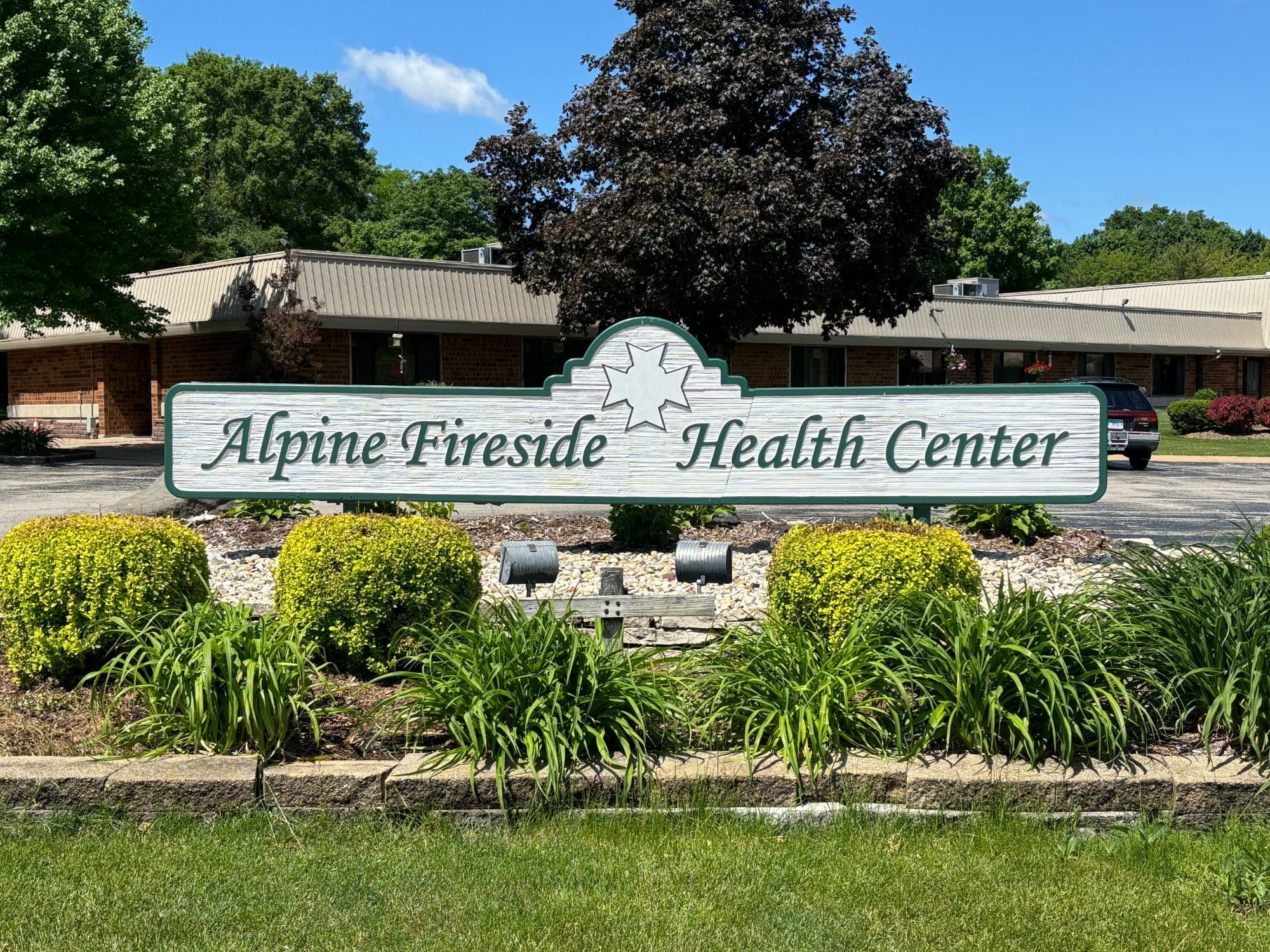
At Alpine Fireside Health Center in Rockford, IL, our admissions team understands that the financial side of nursing home placement is often the most stressful part for families. We work with families across Winnebago County to understand their situation, explain their options, and find a path forward.
We accept Medicare, Medicaid, and private pay — and our team has decades of experience helping families navigate the financial complexities of long-term care with compassion and clarity.
For over 50 years, Alpine Fireside has built an outstanding reputation for quality care. We understand that access to continuing care is crucial for many, and we are well-equipped to meet the evolving needs of our residents.
- Over 50 Years of Excellence
- Comprehensive Care Services
- Personalized Care Plans
- Caring and Dedicated Staff
- Welcoming and Secure Environment