
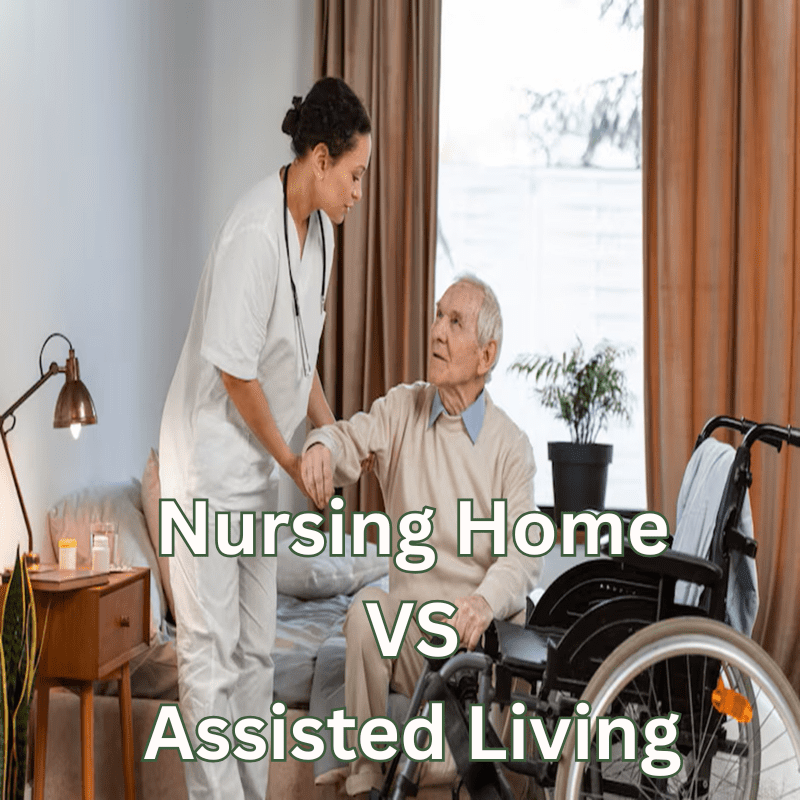
nursing home vs assisted living cost
Nursing Home vs. Assisted Living Cost Comparison: What Illinois Families Need to Know in 2026
When planning for a parent's care, the financial question comes up fast: how much will this cost, and can we afford it? Nursing homes and assisted living communities have very different price points — but also very different levels of care. Choosing the cheaper option isn't always the right move if it doesn't meet your loved one's actual needs.
Here's a side-by-side cost comparison of nursing homes versus assisted living in Illinois for 2026, along with the factors that drive those costs and the payment options available to families.
Nursing Home Costs in Illinois — 2026
Skilled nursing facilities provide the highest level of residential care for seniors and are priced accordingly. In Illinois:
- Semi-private room: approximately $6,266 to $7,452 per month (or roughly $205 to $246 per day)
- Private room: approximately $7,156 to $8,669 per month (or roughly $235 to $285 per day)
- Annual cost for a semi-private room: approximately $75,000 to $89,000
- Annual cost for a private room: approximately $86,000 to $104,000
Rockford-area nursing home rates tend to fall in the lower-to-mid range of these figures, which is a meaningful financial advantage for Winnebago County families compared to the Chicago metro area.
Assisted Living Costs in Illinois — 2026
Assisted living offers a lower level of care — and a lower price point — than skilled nursing. In Illinois:
- Average monthly cost: approximately $5,225 per month
- Annual cost: approximately $62,700
The lower cost reflects a less intensive care model — lower staffing ratios, fewer clinical services, and less medical oversight. Many assisted living communities charge a base rate plus additional fees for higher levels of care assistance, so the final cost can rise significantly depending on the resident’s needs.
The Real Cost Difference — and What It Buys
On average, skilled nursing costs approximately $1,000 to $2,000 more per month than assisted living in Illinois. That’s a meaningful difference — roughly $12,000 to $24,000 per year.
But the cost difference reflects a genuine difference in what you receive:
Skilled Nursing Includes
- 24-hour licensed nursing care
- Complex medication management and IV therapy
- Physical, occupational, and speech therapy
- Wound care and post-surgical monitoring
- Clinical management of complex chronic conditions
Assisted Living Typically Does Not Include
- Around-the-clock licensed nursing
- Skilled therapy services
- Complex clinical care for unstable medical conditions
- Memory care at the intensity level of a skilled nursing environment
Choosing assisted living for a loved one whose needs actually require skilled nursing can lead to costly and dangerous gaps in care — and often results in emergency hospitalizations or an early transition to skilled nursing anyway.
What Does Insurance Cover for Each?
Medicare
Medicare covers short-term skilled nursing rehabilitation after a qualifying hospital stay — not long-term care. Medicare does not cover assisted living at all, under any circumstances.
Medicaid
Illinois Medicaid covers long-term care in Medicaid-certified nursing homes for eligible residents. Medicaid coverage for assisted living in Illinois is limited and program-specific. For families relying on Medicaid for ongoing care, a skilled nursing facility is typically the more accessible option.
Long-Term Care Insurance
Most long-term care insurance policies cover both nursing home and assisted living care, subject to the policy’s benefit levels and elimination period. Review the specific policy carefully to understand what is covered and at what daily benefit amount.
Private Pay
Families paying privately have maximum flexibility in both settings. Private pay allows access to private rooms in skilled nursing facilities — which Medicaid typically does not cover.
Hidden Costs to Watch For
In both settings, the advertised base rate is rarely the full picture. Watch for additional charges in:
- Assisted living: tiered care levels, medication management fees, incontinence care, memory care add-ons
- Nursing homes: therapy copays (days 21–100 on Medicare), specialty equipment, private room upgrades
Ask for a full, itemized fee schedule before making a placement decision. Reputable facilities like Alpine Fireside Health Center will be fully transparent about what is and is not included.
Which Is the Better Financial Choice?
The honest answer: it depends entirely on your loved one’s care needs. If they require skilled nursing care and you choose assisted living instead, you may appear to save money initially — only to face an emergency hospitalization, rapid care transition, or higher cost later.
If assisted living genuinely meets your loved one’s current needs, it’s the more cost-effective option for now. The key is matching care level to actual need — and being prepared to reassess as needs change over time.
Transparent, Quality Care in Rockford, IL
Alpine Fireside Health Center is a family-owned, 5-star rated skilled nursing facility in Rockford, IL, serving Winnebago County families since 1973. We’re Medicaid and Medicare certified, and our admissions team is experienced in helping families understand their options, compare costs, and find a care path that’s financially sustainable and clinically appropriate.
We believe every family deserves honest guidance — not just a sales pitch. If you’re weighing your options, we’d be glad to talk it through.
For over 50 years, Alpine Fireside has built an outstanding reputation for quality care. We understand that access to continuing care is crucial for many, and we are well-equipped to meet the evolving needs of our residents.
- Over 50 Years of Excellence
- Comprehensive Care Services
- Personalized Care Plans
- Caring and Dedicated Staff
- Welcoming and Secure Environment