Physical Therapy for Seniors
Physical Therapy for Strength, Balance, and Fall Prevention
Falls are the leading cause of injury-related death and disability in adults over 65. Each year, more than one in four older Americans falls, and fall-related injuries — including hip fractures, head trauma, and wrist fractures — account for billions of dollars in healthcare costs and, more importantly, enormous human suffering.
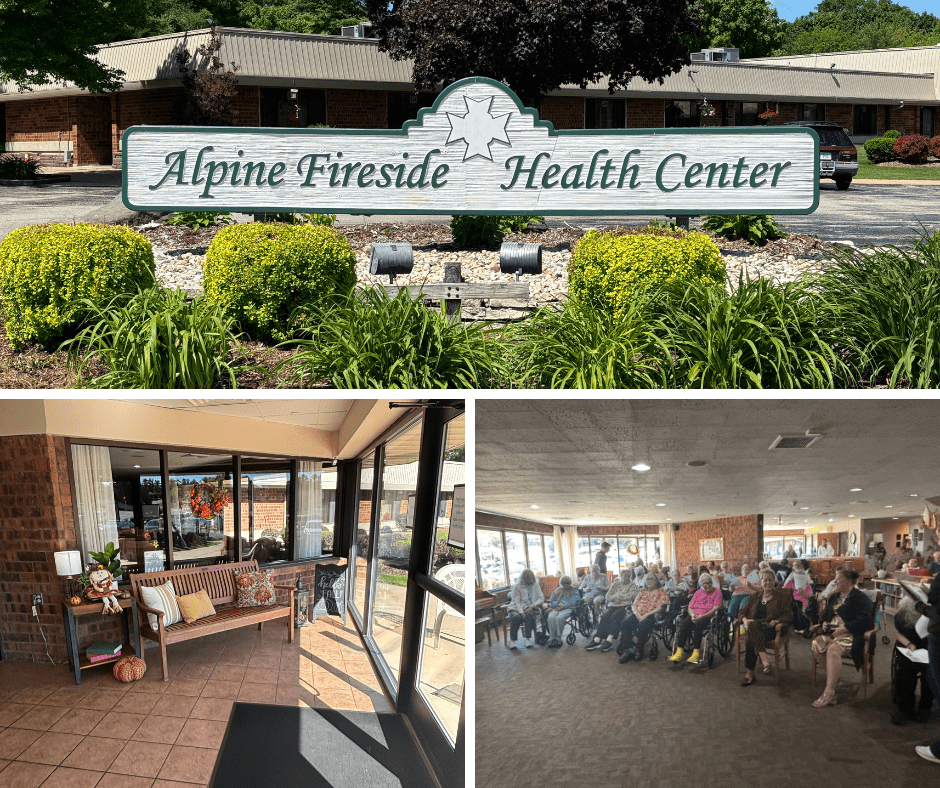
Physical therapy is one of the most powerful tools available for reducing fall risk and restoring function after a fall or other health event. At Alpine Fireside Health Center in Rockford, Illinois, our physical therapists work with residents to rebuild strength, improve balance, restore mobility, and build the confidence needed to move safely and independently.
Senior Care Rockford IL
Why Falls Are So Dangerous for Older Adults
A fall that would cause a minor bruise in a younger adult can be life-altering for an elderly person. Contributing factors include:
- Reduced bone density (osteoporosis) means fractures are more likely from lower-impact falls
- Blood thinners — common in elderly patients — increase the risk of dangerous bleeding after head injuries
- Slower healing and recovery mean post-fall complications are more prolonged
- Fear of falling after an initial fall often leads to reduced activity, deconditioning, and — paradoxically — even higher fall risk
- Hip fractures in elderly patients carry a 20–30% mortality rate within one year
Common Causes of Falls in Seniors
Physical therapists are trained to identify and address the underlying causes of falls, which commonly include:
- Muscle weakness — particularly in the legs and core
- Balance and coordination impairment
- Gait abnormalities — shuffling, wide-based walking, or festination in Parkinson's
- Vestibular dysfunction — inner ear problems that cause dizziness
- Orthostatic hypotension — blood pressure drops when standing
- Medication side effects — sedation, dizziness, and confusion
- Visual impairment
- Environmental hazards — poor lighting, loose rugs, slippery floors
How Physical Therapy Addresses Fall Risk
Comprehensive Fall Risk Assessment
The first step is a thorough evaluation. Physical therapists use standardized assessment tools to quantify fall risk and identify specific contributing factors:
- The Timed Up and Go (TUG) test measures mobility and fall risk
- Berg Balance Scale quantifies balance across 14 functional tasks
- Dynamic Gait Index evaluates gait stability during movement tasks
- Four Square Step Test assesses dynamic balance and stepping ability
These assessments establish a baseline, guide treatment planning, and track progress over time.
Strengthening Exercises
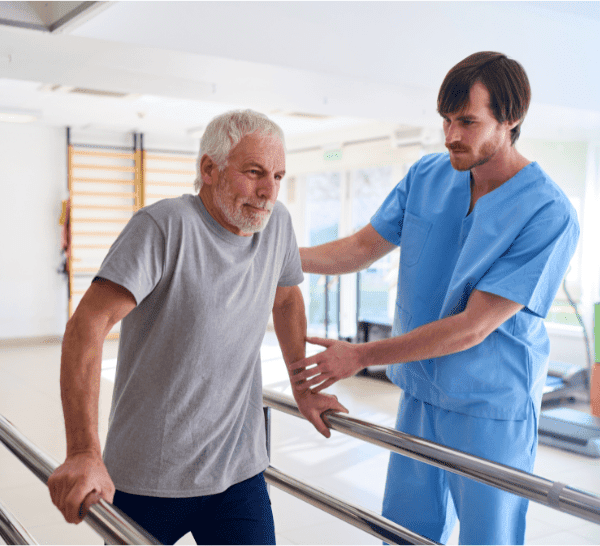
Leg strength — particularly in the quadriceps (front of thigh), hip abductors, and ankle muscles — is directly linked to fall risk. Physical therapists prescribe progressive resistance exercises targeting these muscle groups, starting at an appropriate intensity for each resident and advancing as strength improves.
Core strengthening is equally important for balance. A strong core allows the body to make rapid postural corrections when balance is challenged — the split-second response that prevents a stumble from becoming a fall.
Balance Training
Balance training challenges the body's stability systems in controlled, progressive ways. Physical therapists use:
- Standing exercises with progressively narrowed base of support
- Single-leg stance practice with support as needed
- Tandem (heel-to-toe) walking
- Perturbation training — controlled challenges to balance that train rapid reactive responses
- Foam pad standing to challenge proprioceptive (body position) sense
- Tai Chi-based movements — particularly effective for fall prevention in research studies
Gait Training
Safe, efficient walking requires coordination of many body systems. Physical therapists analyze each resident's gait pattern and address specific problems — including shuffling steps, poor foot clearance, reduced arm swing, or unsafe turning technique.
Gait training may include walking on different surfaces (carpet, tile, uneven terrain), navigating obstacles, practicing safe turning and direction changes, and building endurance for longer walking distances.
Assistive Device Training
Walkers, canes, and rollators are valuable fall prevention tools — but only when used correctly. Physical therapists ensure that each resident is using the appropriate device for their needs and that they are using it safely: proper height adjustment, correct walking pattern, safe turning technique, and navigating thresholds and ramps.
The wrong assistive device or incorrect use can actually increase fall risk rather than reduce it.
Transfer Training
Many falls happen during transfers — moving from bed to standing, from a wheelchair to a chair, or getting up from the toilet. Physical therapists teach safe transfer techniques for residents and educate family members and caregivers on how to assist correctly without increasing risk for either the resident or the caregiver.
Vestibular Rehabilitation
Inner ear disorders — particularly benign paroxysmal positional vertigo (BPPV), which causes sudden, brief dizziness with head movement — are common in older adults and significantly increase fall risk.
Physical therapists trained in vestibular rehabilitation use repositioning maneuvers (such as the Epley maneuver for BPPV) and habituation exercises to resolve or reduce vestibular dysfunction.
Rockford Skilled Nursing
Fall Prevention Education
Beyond direct therapy, physical therapists educate residents and families on strategies that reduce fall risk at home and in the facility:
- Safe footwear — low-heeled, well-fitting shoes with non-slip soles
- Rise slowly after sitting or lying to allow blood pressure to stabilize
- Use handrails consistently on stairs
- Adequate lighting in all rooms, especially at night
- Medication review with the physician — identifying and minimizing fall-risk medications
- Regular vision exams and appropriate eyewear
- Adequate calcium and vitamin D for bone health
Alpine Fireside Rockford, IL
Physical Therapy at Alpine Fireside Health Center
At Alpine Fireside Health Center, our physical therapy team is passionate about helping residents regain their strength, balance, and confidence. We understand that a fall — or the fear of falling — can profoundly affect quality of life. Our goal is to help every resident move as safely and independently as possible.
We provide individualized treatment plans, ongoing progress monitoring, and close coordination with nursing, occupational therapy, and physicians to ensure a comprehensive approach to fall prevention and mobility rehabilitation.